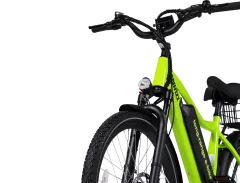
What Is an E-Bike? The Complete Guide
What is an e-bike, how does it work, the 3 e-bike classes, types, costs, and the laws you need to know — explained simply in this 2026 guide.
An e-bike is a regular bicycle with a battery and an electric motor that helps you pedal. That one addition changes almost everything about how far you can ride, how fast you arrive, and how much effort it takes to get there. Here’s how electric bikes actually work, the different types and legal classes, what they cost, and who they’re really for.
So, what is an e-bike, exactly?
An e-bike (short for "electric bicycle") is a bicycle equipped with an electric motor and a rechargeable battery that assist your pedaling. You still pedal like you would on any normal bike, but the motor adds power to each push — so hills feel flatter, headwinds feel weaker, and long distances feel shorter.
The key word is assist. On most e-bikes the motor only helps while you’re putting in effort; it doesn’t replace pedaling the way a moped or motorcycle does. That’s also why, under U. S. federal law, an e-bike with a motor under 750 watts and a top assisted speed of around 20 mph is legally treated as a bicycle — not a motor vehicle. No license, no registration, no insurance required at the federal level (local rules can differ, more on that below).
How does an e-bike work?
Every e-bike is built around four core parts working together:
- Motor — converts battery power into forward motion. It either sits in a wheel (a hub motor) or at the pedals/crank (a mid-drive motor).
- Battery — a rechargeable lithium-ion pack, usually 36V or 48V, that stores the energy. Its size is measured in watt-hours (Wh): more watt-hours means more range.
- Sensor — tells the motor when and how hard to help. A cadence sensor reacts to whether you’re pedaling; a torque sensor reacts to how hard you’re pedaling, which feels smoother and more natural.
- Controller — the small computer that ties it all together and lets you change assist levels from the handlebar display.
There are two ways the motor can deliver that help:
- Pedal-assist (pedelec): the motor kicks in only while you pedal, multiplying your own effort. This is the most common system.
- Throttle: a lever or button (like a small motorcycle throttle) that powers the bike without pedaling at all. Many e-bikes offer both.
The three e-bike classes explained
In the United States, most states use a standardized three-class system to define what an e-bike can do and where it’s allowed to go. Knowing your class matters, because it determines which bike lanes, paths, and trails you can legally use.
The motor itself is generally capped at 750 watts for a bike to qualify as an e-bike rather than a motorized vehicle. Above those limits — higher speeds or bigger motors — you’re usually looking at a moped or electric motorcycle, with very different licensing rules.
Types of e-bikes
"E-bike" is a broad category. The right one depends entirely on what you’ll use it for.
Commuter / urban e-bikes
Built for city streets and everyday riding: comfortable upright position, lights, fenders, and enough range for a daily round trip. This is the most popular category and the best starting point for most riders.
Cargo e-bikes
Longer, sturdier frames designed to haul weight — groceries, kids, or delivery loads. The strong motor and bigger battery make carrying heavy bags up hills genuinely easy, which is why they’re a favorite among food-delivery and courier riders.
Folding e-bikes
Compact frames that fold down to fit in a closet, car trunk, or under a desk. Ideal if you mix biking with transit or have limited storage space.
Electric mountain bikes (eMTB)
Rugged frames, fat or knobby tires, and powerful mid-drive motors for trails and steep climbs.
Fat-tire e-bikes
Oversized tires for stability on sand, snow, gravel, and rough city roads alike.
What makes a good e-bike? Key specs to understand
Once you start comparing models, a few numbers do most of the heavy lifting:
- Range — how far you can go on one charge, typically 20 to 80+ miles depending on the battery, terrain, your weight, and how much assist you use.
- Battery capacity (Wh) — the single biggest driver of range. A 500Wh battery goes meaningfully farther than a 250Wh one.
- Motor power (W) — affects how strongly the bike accelerates and climbs. For city and delivery riding, torque matters more than raw top speed.
- Charge time — most batteries take 3–6 hours to fully recharge. For all-day riders, the ability to swap a depleted battery for a charged one in seconds is a game-changer.
- Weight — e-bikes are heavier than regular bikes (often 45–70 lbs) because of the motor and battery. Worth knowing if you’ll carry it up stairs.
- Safety certification — look for UL 2849 certification on the electrical system and battery. In cities like New York, certified batteries are increasingly required by law for fire safety, so this isn’t optional — it’s essential.
Why ride an e-bike? The real benefits
- You go farther with less effort. Commutes that felt too long on a regular bike become realistic. Hills stop being a reason to drive.
- It’s far cheaper than a car. No gas, no parking, no insurance premiums, and minimal maintenance. For people who drive for work, the savings add up fast.
- You still get exercise. Studies consistently show e-bike riders pedal more often and for longer than they would on a regular bike — because it’s enjoyable rather than exhausting.
- It beats traffic. In dense cities, an e-bike is often the fastest way across town, not just the cheapest.
- It’s a real income tool. For delivery and gig workers, a reliable e-bike means more orders per shift, less fatigue, and higher take-home pay.
Who are e-bikes for?
Almost anyone, but a few groups get outsized value:
- Commuters who want to skip traffic and arrive without being sweaty.
- Students covering a sprawling campus or a cross-town commute on a budget.
- Delivery and gig riders — for DoorDash, Uber Eats, Grubhub and similar platforms, an e-bike is the difference between a tiring shift and a profitable one. Speed, range, and the ability to keep going all day directly affect earnings.
- Anyone replacing short car trips who wants to save money and skip the parking hassle.
How much does an e-bike cost? Buy, rent, or rent-to-own?
There are three ways to get on an e-bike, and the best one depends on how you’ll use it.
Buying outright
As of 2026, retail prices generally fall into three bands:
Buying makes sense if you ride casually and want one machine to own. The downsides: a large upfront cost, and you’re on the hook for every repair, battery replacement, and theft.
Renting
Short-term rental (daily or weekly) is great for tourists or anyone who needs a bike for a few days. It’s flexible but expensive per day if you ride long term.
Rent-to-own / subscription
This middle path has become the go-to for people who ride seriously — especially delivery riders. You pay a low amount upfront and a manageable weekly or monthly fee, maintenance and theft protection are usually included, and after a set term the bike becomes yours. There’s no giant lump sum and no surprise repair bills.
This is the model Whizz is built on. Instead of dropping thousands of dollars upfront, you ride out the same day with a low start cost, pay weekly or monthly, get free maintenance and battery swapping, and own the bike at the end of the term — with no credit check and no SSN required. Because plans and pricing are updated regularly, see current numbers on the Whizz pricing page or the rent-to-own plans.
Are e-bikes legal and safe?
E-bikes are legal across the U. S., but the details vary by state and city, so a few rules are worth knowing:
- Where you can ride depends on your class (see the table above). Class 1 and 2 bikes have the broadest access; Class 3 is sometimes restricted from certain paths.
- Helmets and age limits apply in many places, especially for Class 3. Check your local rules.
- Registration generally isn’t required for standard e-bikes, though a handful of states and cities have their own requirements.
- Battery safety is the big one. The fires you may have read about almost always involve cheap, uncertified batteries. Stick to UL 2849-certified bikes, charge with the original charger, and never leave a battery charging unattended overnight.
E-bike vs. regular bike vs. scooter
An e-bike gives you the range and speed a regular bike can’t, while keeping the exercise, the bike-lane access, and the simplicity a regular bike has. Compared with an electric scooter, an e-bike is more comfortable over distance, more stable, carries more, and is legal in more places. For everyday city transport and delivery work, the e-bike hits the sweet spot.
Frequently asked questions
Do you have to pedal an e-bike?
On a pedal-assist (Class 1 or 3) e-bike, yes — the motor only helps while you pedal. Class 2 bikes add a throttle, so you can ride without pedaling for short stretches.
How far can an e-bike go on one charge?
Most e-bikes travel 20 to 80+ miles per charge, depending on battery size, terrain, rider weight, and how much motor assist you use. Riders who need to cover big distances daily often rely on battery swapping instead of waiting to recharge.
Do you need a license to ride an e-bike?
For standard e-bikes (under 750W and within the class speed limits), no license, registration, or insurance is required at the federal level. Always check your local city and state rules, which can vary.
Are e-bikes worth it for delivery riders?
For many, yes. A reliable e-bike means more deliveries per shift and less fatigue, which directly increases earnings. The main barrier is upfront cost — which is why rent-to-own and subscription models are popular with gig workers.
Is it better to buy or rent an e-bike?
Buy if you ride casually and want to own one machine outright. Rent short-term for occasional use. For regular or work riding, rent-to-own gives you a low start cost, included maintenance, and eventual ownership without a large lump sum.