The motor is the heart of an e-bike, and almost every one uses one of two designs: a hub motor in the wheel, or a mid-drive motor at the pedals. For a delivery rider, that choice quietly decides how the bike climbs, how often it needs the shop, and how much it costs to keep running. Here’s how the two compare — and which one actually makes sense for delivery work.
What is a hub motor?
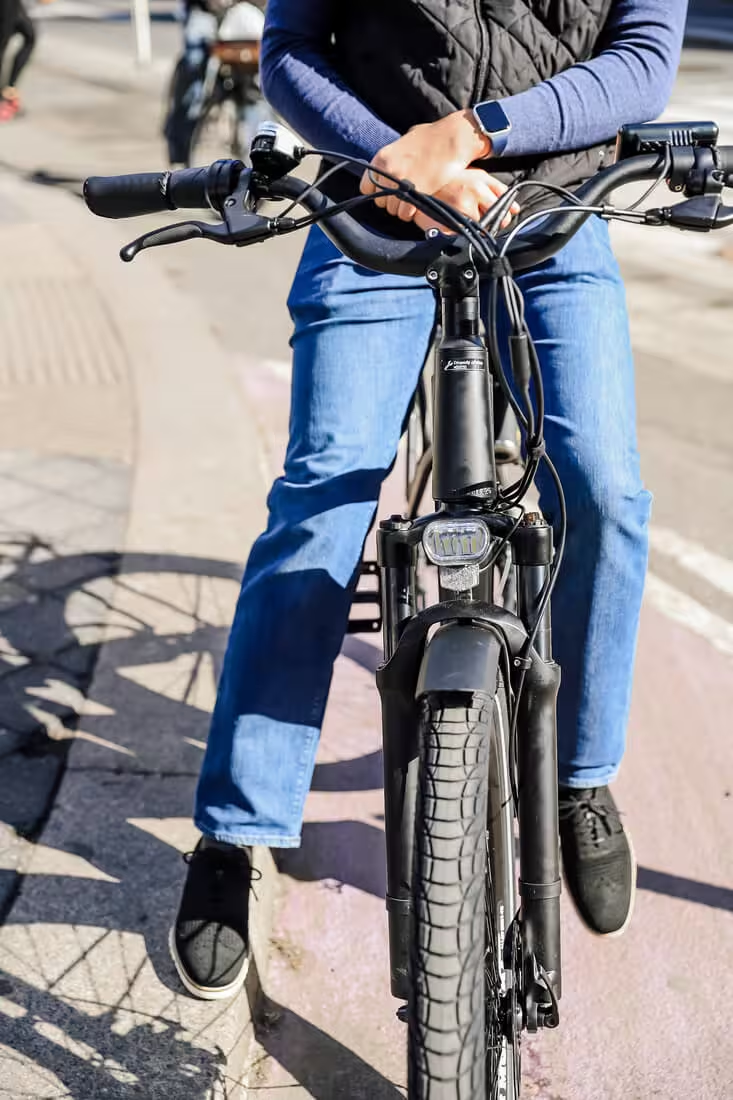
A hub motor is built into the center of a wheel — almost always the rear wheel on a delivery bike. It pushes the wheel directly, completely independent of the chain, pedals, and gears. Most city and delivery e-bikes use a geared rear hub motor, which is compact and gives good low-speed pull.
Because it works on its own, a hub motor is simple and tough. There’s no extra strain on your chain or gears, it pairs easily with a throttle so you can ride without pedaling, and there’s very little that can go wrong with it. The trade-offs: the motor adds weight at the wheel, a rear flat is more of a job because the wheel is wired to the motor, and on long, steep climbs it can’t multiply its power through gears the way a mid-drive can.
What is a mid-drive motor?
A mid-drive motor sits low and central, at the cranks where the pedals attach, and sends its power through the bike’s chain and gears — the same drivetrain you pedal. That’s its superpower: it can use low gears for mechanical advantage, so it climbs hills strongly and tends to be more efficient, which can mean more range from the same battery.
Putting the weight low and in the middle also makes the bike handle and balance better, and because there’s no motor in the wheels, changing a flat is just a normal wheel change. The downsides matter for delivery, though: because all that power runs through the chain, it wears out the chain, cassette, and sprockets faster; mid-drives cost more up front; and repairs are more specialized and pricier. They’re also usually pedal-assist only, with no true throttle.
Hub vs mid-drive at a glance
|
Hub motor |
Mid-drive motor |
| Where it sits |
In the wheel (usually the rear) |
At the cranks / bottom bracket |
| Hill climbing |
Adequate on flats and mild hills |
Stronger — uses the bike's gears |
| Range / efficiency |
Good |
Usually better, especially loaded or hilly |
| Throttle |
Easy to add — ride without pedaling |
Usually pedal-assist only |
| Maintenance |
Low — independent of chain and gears |
Higher — wears the chain and cassette faster |
| Durability for delivery |
Simple and hard to break |
Capable, but drivetrain takes a beating |
| Repair cost |
Lower |
Higher and more specialized |
| Fixing a flat |
Rear flats are more fiddly (motor in wheel) |
Easier — wheels are normal |
| Weight balance |
Weight at the wheel |
Centered and low — better handling |
| Price |
Lower |
Higher |
A quick word on sensors
Whichever motor you choose, it’s paired with a sensor that decides how the assist feels. A cadence sensor simply detects whether you’re pedaling and adds power — simple and common on hub-motor and throttle bikes. A torque sensor measures how hard you push and scales the assist to match, which feels smoother and more natural and is typical on mid-drives. For stop-and-go delivery, many riders actually prefer the instant, predictable kick of a cadence-sensor-plus-throttle setup.
So which is better for delivery?
There’s no universal winner — it depends on your city and your routes. But for most delivery work, the priorities are uptime, low maintenance, and the ability to grind through a stop-start shift with a loaded bag, and that tilts the answer.
Hub motor wins for most city delivery
If you ride a dense, mostly flat city — NYC, Chicago, Philadelphia, much of DC — a geared rear hub motor is the workhorse. It’s durable, cheap to maintain, throttle-friendly for constant starts and stops, and it keeps the bike on the road instead of in the shop. When the bike is your income, fewer drivetrain repairs and less downtime is a financial feature, not just a convenience.
Mid-drive is worth it for serious hills
If your city is genuinely hilly — San Francisco is the obvious case — or you cover long distances and want every mile out of the battery, a mid-drive’s gear-driven climbing power and efficiency can be worth the higher cost and chain wear. Just budget for more frequent drivetrain maintenance under daily delivery loads.
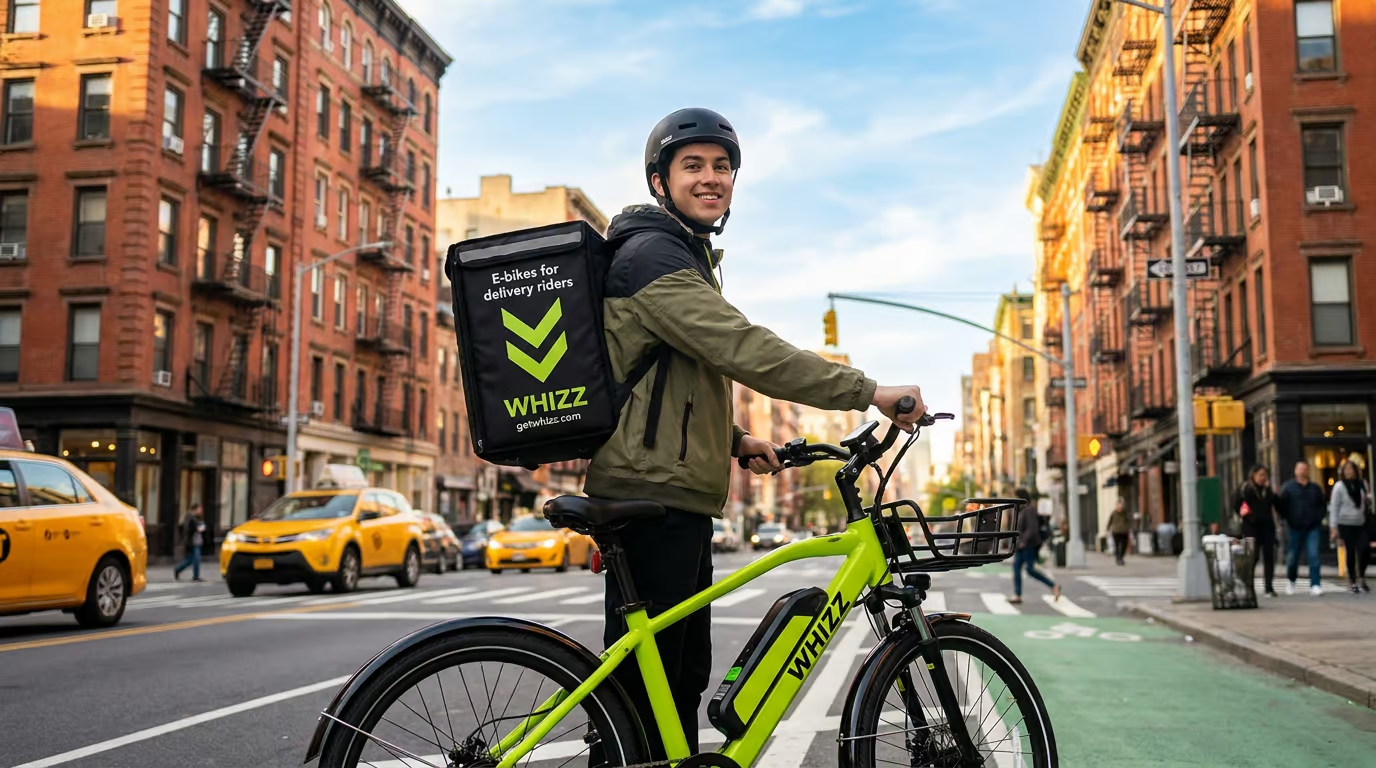
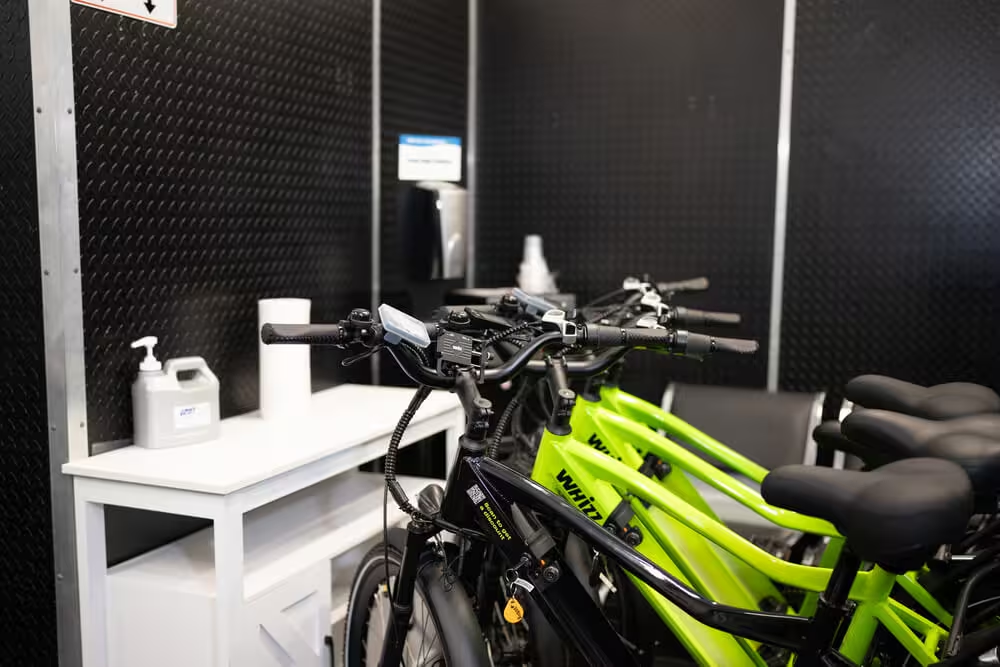
For rented delivery bikes, this is mostly handled for you. Purpose-built rental fleets are tuned for durability and uptime rather than for spec-sheet bragging rights — Whizz delivery bikes, for example, are built around the demands of all-day city couriers. If you rent, the more useful questions are real-world range, how repairs are handled, and battery options, rather than the motor type alone.
Frequently asked questions
Is a hub motor or mid-drive better for food delivery?
For most flat, dense cities, a geared rear hub motor is the better fit — it’s durable, low-maintenance, and works with a throttle for constant stop-and-go riding. Mid-drive motors make more sense in very hilly cities or for long, loaded routes where their gear-driven climbing and efficiency pay off.
Do mid-drive motors really wear out chains faster?
Yes. Because a mid-drive sends its power through the chain and gears, those parts wear faster than on a hub-motor bike — something to factor in when you’re riding heavy loads every day.
Can I get a throttle with a mid-drive motor?
Usually not. Mid-drives are typically pedal-assist only. If you want to ride on throttle alone — handy in stop-and-go traffic — a hub motor is the safer bet.
Does motor type affect range?
It can. Mid-drives are often a bit more efficient, especially on hills or under load, so they may squeeze more range from the same battery. In flat cities the difference is smaller, and overall battery capacity matters more.
The bottom line
Both motor types can do delivery work, but they’re built around different strengths. A hub motor keeps things simple, durable, throttle-friendly, and cheap to maintain — ideal for flat, busy cities where uptime is everything. A mid-drive trades higher cost and more chain wear for stronger hill-climbing and efficiency, which earns its keep on steep terrain and long routes. Match the motor to your city and your shifts, and you’ll spend more time earning and less time in the repair queue.
Looking for a delivery-ready e-bike? Whizz bikes are built and supported for all-day city delivery, with battery swapping available and UL-certified equipment. Explore Whizz e-bikes.
Want to go deeper on the basics first? See What Is an E-Bike? and E-Bike Classes Explained.