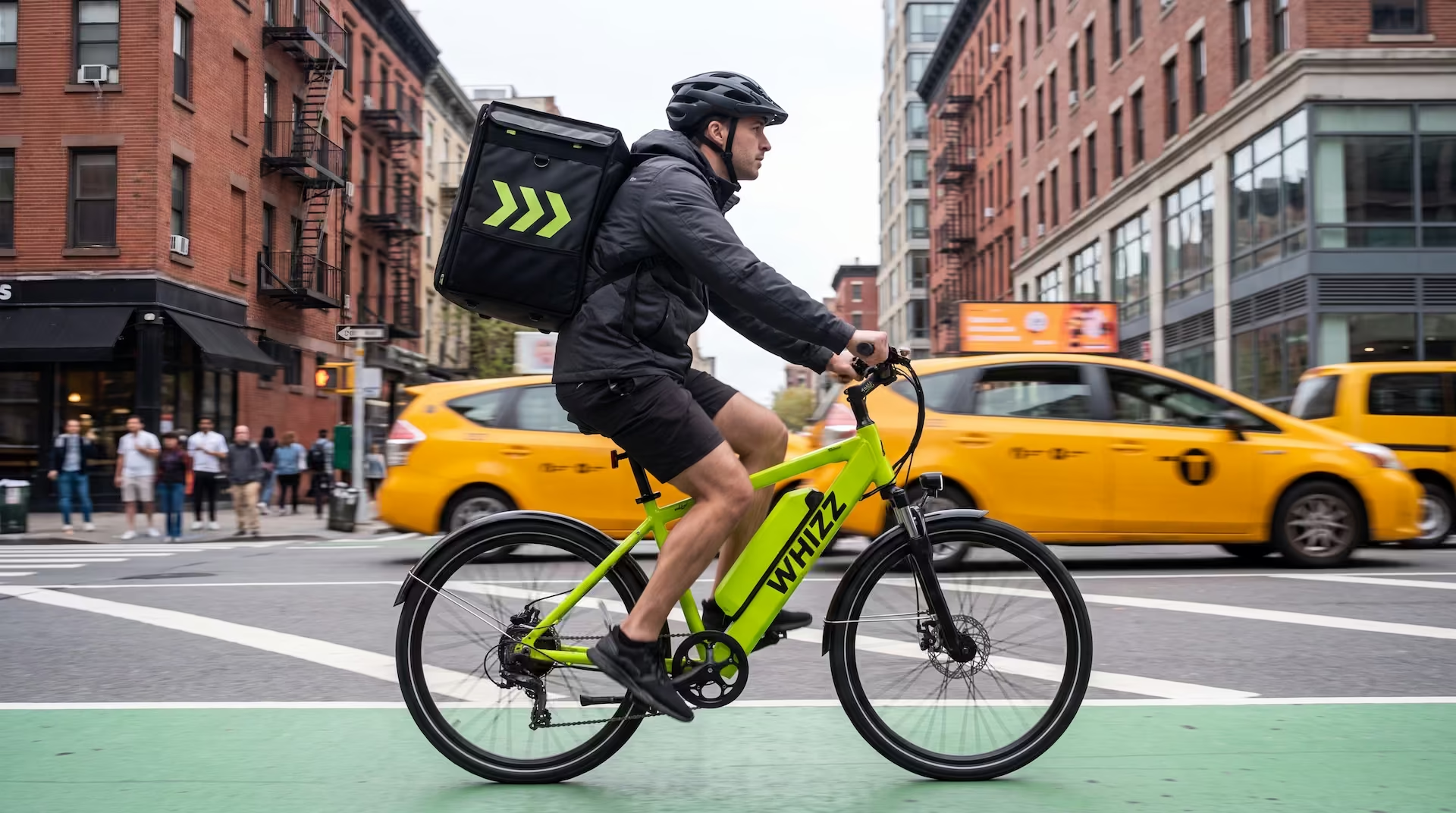
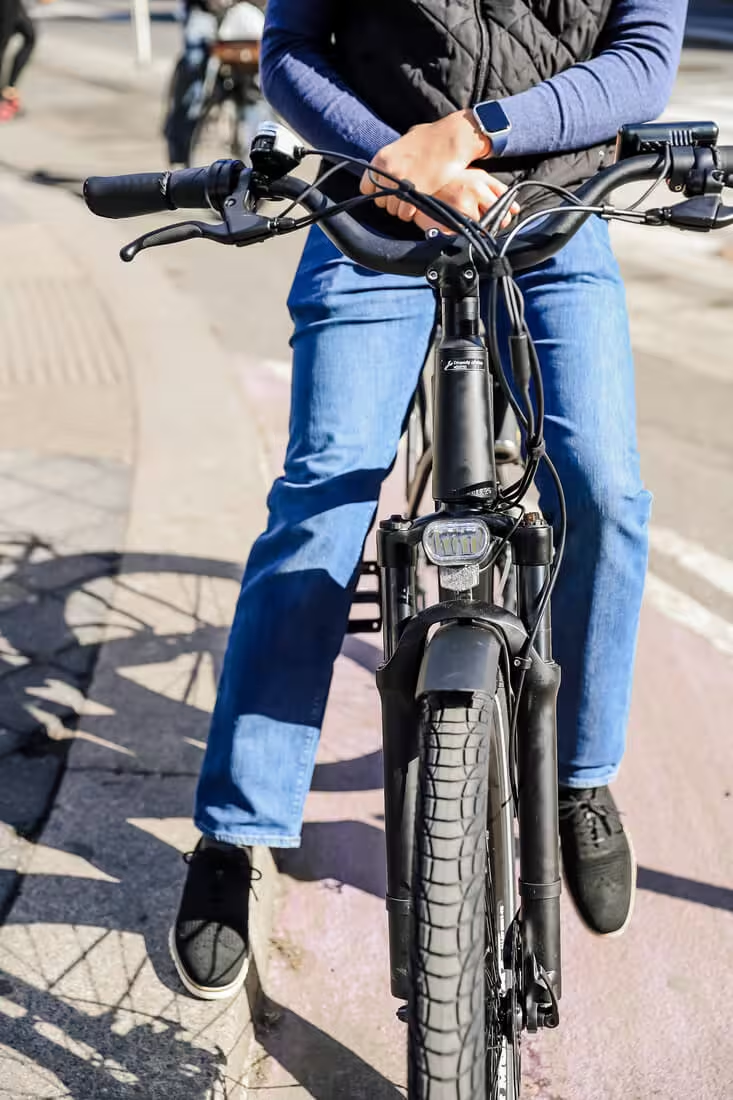
Your e-bike’s motor decides how much power is available — but a small sensor decides when and how that power actually reaches you. It’s the difference between a bike that feels like a natural extension of your legs and one that feels like a steady push from behind. Here’s how cadence and torque sensors differ, and which one suits delivery work.
What is a cadence sensor?
A cadence sensor detects whether the pedals are turning. The moment you start pedaling, the motor delivers a preset amount of power for whatever assist level you’ve chosen; when you stop, the motor winds down. It doesn’t care how hard you’re pushing — only that you’re pedaling at all.
That makes it simple, reliable, and affordable, which is why it’s common on city and delivery e-bikes — and it pairs naturally with a throttle. The feel is a consistent "push": the motor does most of the work regardless of your effort. The trade-offs are a slight delay when you start or stop pedaling, a less natural feel, and the fact that it can spend battery delivering power you didn’t really need.
What is a torque sensor?
A torque sensor measures how hard you press on the pedals — using a small strain gauge — and scales the motor’s help to match, almost instantly. Push harder, get more; ease off, get less. The result feels like a natural amplification of your own effort rather than a separate push.
That responsiveness brings real benefits: smoother power, better control, and better efficiency — because the motor only gives what you ask for, you often get more range from the same battery. The downsides are mostly cost (torque sensors are pricier and tend to appear on higher-end and mid-drive bikes) and the fact that you do have to keep putting in effort to get assist.
Cadence vs torque at a glance
|
Cadence sensor |
Torque sensor |
| What it measures |
Whether you're pedaling (pedal motion) |
How hard you're pedaling (pedal force) |
| How assist feels |
A steady push at a preset level |
A natural boost that scales with your effort |
| Responsiveness |
Slight lag starting and stopping |
Near-instant |
| Efficiency / range |
Good — but can use power you don't need |
Better — power matches demand |
| Throttle |
Pairs easily with a throttle |
Less common with throttle |
| Physical effort |
Lower — the motor does more of the work |
Higher — you must keep putting in effort |
| Cost |
Lower |
Higher |
So which is better for delivery?
Neither is simply "better" — they suit different riders and routes. For delivery specifically, two things tend to decide it: how much you value effortless stop-and-go versus efficiency and feel.
Cadence + throttle: effortless stop-and-go
Delivery is a grind of constant stops — lights, pickups, drop-offs — often with a loaded bag. A cadence sensor paired with a throttle lets you pull away from a standstill without having to crank hard every single time, which saves your legs over a long shift. For many city couriers, that effortless, throttle-on-demand power is the deciding factor, and it usually costs less too.
Torque sensor: efficiency, range, and feel
If you cover long distances, ride varied or hilly terrain, or simply want the most natural, controllable ride, a torque sensor is the nicer tool. Its efficiency can stretch your range — useful when a charge has to last a full shift — and the precise power delivery is easier to modulate in tight, busy traffic.
In practice, plenty of purpose-built delivery e-bikes lean toward a cadence-plus-throttle setup because effortless, instant power matches the rhythm of the job. If range and ride feel are your priority, look for a torque sensor. Either way, total battery capacity and the motor itself matter just as much as the sensor.
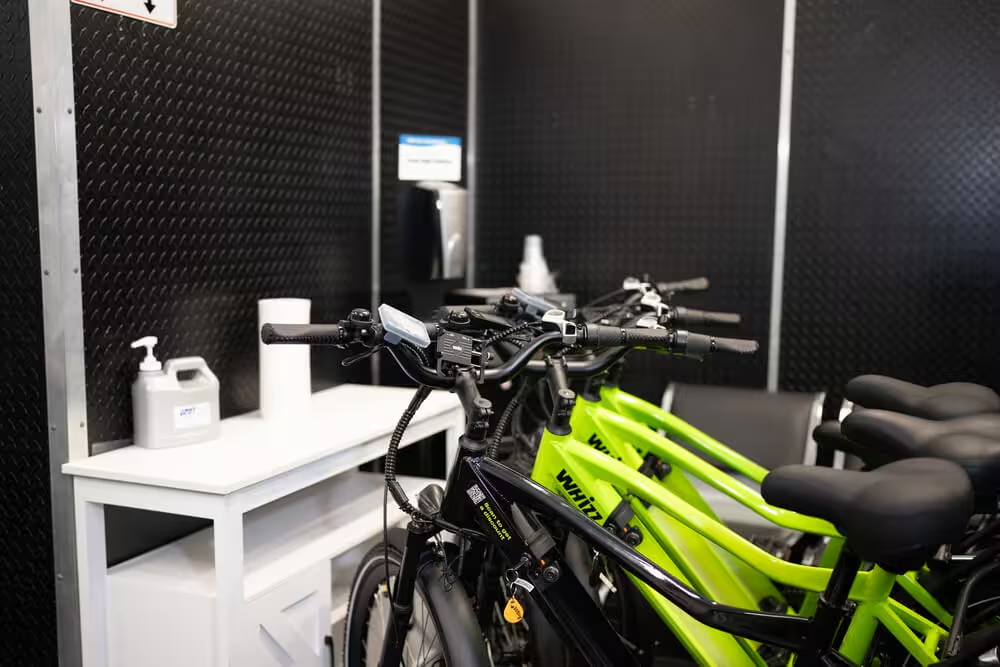
Renting? Test the feel before you commit. Sensor type shapes how a bike rides more than any spec sheet can tell you — so take a test ride and notice how the assist comes on. Whizz delivery bikes are built and supported for all-day city riding, with battery swapping available and UL-certified equipment; a quick ride will tell you whether the power delivery suits your style.
Frequently asked questions
Is a torque or cadence sensor better for food delivery?
It depends on what you value. A cadence sensor with a throttle is great for effortless stop-and-go city delivery and usually costs less. A torque sensor gives a smoother, more efficient ride with better range, which helps on long or hilly routes.
Does a torque sensor give more range?
Often, yes. Because a torque sensor delivers power in proportion to your effort instead of a fixed amount, it tends to use the battery more efficiently — which can mean more miles per charge, especially under load or on hills.
Can you have a throttle with a torque sensor?
It’s possible but less common. Throttles are most often paired with cadence-sensor bikes. If riding on throttle alone is important to you, check that a specific bike supports it.
Which sensor needs less physical effort?
A cadence sensor. It delivers a set amount of power whenever you pedal (and works with a throttle), so the motor carries more of the load. A torque sensor only helps in proportion to how hard you push.
The bottom line
The sensor is the quiet component that decides how your e-bike feels to ride. A cadence sensor keeps things simple, affordable, and throttle-friendly — ideal for the effortless stop-and-go of city delivery. A torque sensor delivers a smoother, more efficient, more natural ride that rewards long distances and varied terrain. Decide which matters more for your shifts, then take a test ride to feel the difference for yourself.
Related reading: Hub Motor vs Mid-Drive, What Is an E-Bike?, and E-Bike Classes Explained.