Can you ride an e-bike without battery power
E-bikes have transformed how people navigate cities by effortlessly combining the advantages of human-powered bicycles with the ease of being motor-assisted. But can you ride an e-bike without battery power? Is this even practical thing to do?
One of the most common questions from new e-bike owners is: can you ride an e-bike without battery power?
The short answer is yes — but the experience varies significantly depending on the bike's design, weight, and motor type.
Here's what you need to know.
Does an e-bike work without battery power?
Yes. An e-bike is, at its core, a bicycle. When the battery is depleted or removed, most e-bikes can still be ridden using pedal power alone. The motor does not engage, and the bike functions like a conventional bicycle.
However, there's a significant catch: e-bikes are heavier than regular bikes — typically 50–80 lbs depending on the model. That extra weight makes unpowered pedaling noticeably more difficult, especially on hills or over long distances.
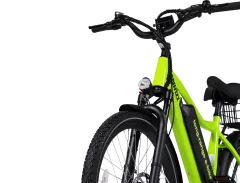
The Storm-2 from Whizz weighs approximately 66 lbs. Riding it without assistance is possible, but demanding. For short distances on flat ground, it's manageable. For a full delivery shift, it's not practical.
What affects how rideable an e-bike is without power?
Motor type
Hub motors (rear or front wheel) create some resistance when the motor is not engaged, because the internal magnets create drag. This is usually minor but noticeable at low speeds or on inclines.
Mid-drive motors disengage more cleanly from the drivetrain and are generally easier to pedal without power. However, mid-drive motors are less common in delivery-focused e-bikes.
Total weight
The heavier the bike, the harder it is to pedal unpowered. E-bikes in the 60–80 lb range require significantly more effort than a 25 lb road bike.
Gear range
Some e-bikes have limited or no gearing. A wide gear range allows you to use low gears to manage hills without power, which makes a big difference for long-distance unpowered riding.
Tire width
Wider tires increase rolling resistance. A bike with 2.0"+ tires requires more pedaling effort unpowered than one with 1.5" tires.
Practical scenarios: when might you ride without power?
- Battery dies mid-shift: The most common scenario for delivery riders. You need to cover a short distance to a charging point or swap station.
- Battery removed for safety or charging: Some riders remove the battery when parking the bike or charging indoors. Riding without it is possible for short moves.
- Power cut by regulations: Some locations restrict e-bike motor use. Knowing your bike can be ridden manually is useful in these situations.
Tips for riding without battery power
- Shift to a low gear before the battery runs out to make the transition easier.
- Plan your route to minimize hills if you know you're running low.
- Use battery swapping to avoid dead-battery situations entirely. Whizz offers swap stations in multiple cities where riders can exchange a depleted battery for a full one in minutes.
- Carry a portable charger if your shift regularly pushes battery limits. Some riders keep a small power bank for emergency partial charges.